Evaluating Ready-to-Publish Recipe Book Interior Templates
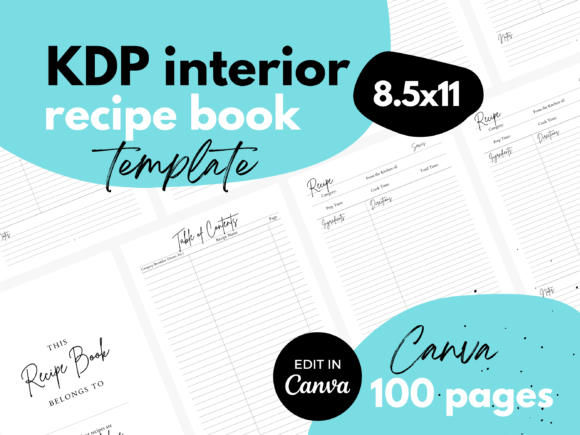
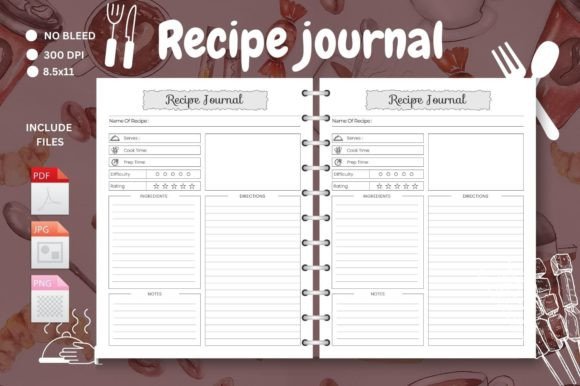
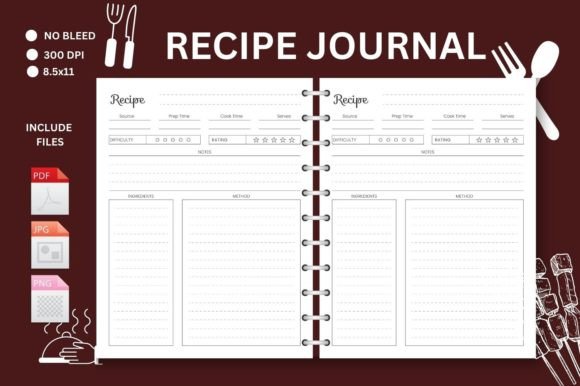
For individuals considering self-publishing a cookbook or recipe collection, the task of interior design and formatting often presents a significant hurdle. The Recipes Book Interior Cover represents one of many available templated solutions designed to streamline this process. It is a pre-formatted, multi-page layout specifically intended for culinary publications. Its distinct characteristic lies in its claim of being a fully prepared package, tested for compatibility with Amazon's Kindle Direct Publishing platform, and ready for immediate upload or physical printing.
This approach contrasts with several other methods authors might explore. One alternative is designing a book interior entirely from scratch using graphic design software. This offers maximum creative control but requires considerable skill, time, and an understanding of publishing specifications. Another common path is utilizing general-purpose book templates that are not tailored for recipes. While these can work, they may lack optimized features like dedicated sections for ingredient lists, step-by-step instructions, or cooking notes. A third option involves hiring a freelance designer or utilizing a full-service publishing company, which provides expertise but at a higher financial cost.
Core Features and Practical Functionality
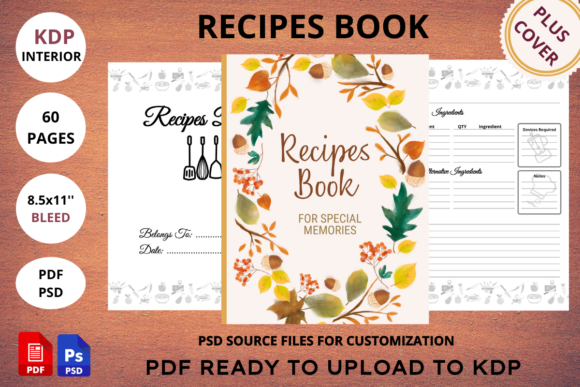
The specifications of the Recipes Book Interior Cover package are clear and pragmatic. It is structured for a standard 8.5 x 11 inch book size, includes 60 pages, and provides files with bleed—a crucial technical requirement for professional printing where color or graphics extend to the edge of the page. The inclusion of both a PDF ready for KDP upload and a PSD (Photoshop) source file addresses two primary user needs. The PDF serves those who want a no-fuss, immediately usable product. The editable PSD file, however, is a significant value point for users with access to Photoshop and some basic design competency, allowing for customization of colors, fonts, and layout elements to better match their personal vision or brand.
Furthermore, the inclusion of a paperback cover file in both PDF and PSD formats extends the template's utility beyond just the interior pages. This creates a cohesive package, reducing the need to source or design a separate cover, though it's wise to remember that cover design is a distinct marketing art form. The promise of being "100% formatted and tested" aims to alleviate common anxieties about KDP's strict file requirements, which can lead to frustrating rejections during upload.
Strengths and Intended User Fit
The primary strength of this type of template is its efficiency. For an author who possesses their recipe content but lacks design expertise or time, it offers a swift path to a professionally structured interior. The provided high-quality PDF eliminates guesswork regarding margins, resolution, and trim safety. This can be particularly advantageous for project-oriented individuals, such as community group leaders compiling a fundraiser cookbook or families wanting to preserve heirloom recipes in a polished format for personal printing.
The editable PSD file introduces a layer of flexibility. A user who finds the base layout appealing but wishes to adjust the color scheme to match their cuisine theme—for instance, using earthy tones for a wild foraging cookbook or vibrant colors for a tropical cocktail guide—can do so without rebuilding the entire document. This positions the Recipes Book Interior Cover as a hybrid solution between a rigid template and a fully custom design.
Tradeoffs and Limitations to Consider
While templated solutions provide convenience, they inherently involve tradeoffs. The most evident is the constraint of a predefined layout. A recipe book's interior design impacts readability and user experience. If the template's structure—the way it presents ingredients, methods, and tips—does not align with an author's specific content or aesthetic preference, it might feel restrictive. For example, a book featuring complex baking recipes requiring extensive notes and variations might need a different layout than one for simple weekday dinners.
The reliance on Adobe Photoshop for customization is another factor. Users who do not own or know how to use Photoshop will find the PSD file unusable for edits. While alternative software can sometimes open PSDs, compatibility is not guaranteed. Therefore, the "editable" benefit is conditional on the user's tools and skills. Furthermore, a 60-page count is a fixed parameter. Authors with significantly more or fewer recipes would need to adapt the file by adding or removing pages, which again requires design software proficiency.
When This Template Might Be the Right Choice
The Recipes Book Interior Cover template is likely an excellent fit in several realistic scenarios. First, for time-sensitive projects where speed to market is prioritized over unique design. Second, for authors who are comfortable with basic Photoshop adjustments and seek a solid foundation they can tweak rather than a blank canvas. Third, for projects intended primarily for print-on-demand through KDP, where technical compliance is paramount, and the tested PDF provides assurance. Lastly, it suits pragmatic creators who view their book primarily as a functional vessel for content rather than a high-design artistic statement.
Situations Calling for Alternative Approaches
There are clear circumstances where exploring other options would be advisable. If an author's vision demands a highly unique, art-forward interior that breaks conventional recipe presentation molds—such as an integrated photographic journey or an avant-garde layout—a custom design from scratch or a commissioned professional would be necessary. Similarly, authors planning to use a non-standard book size (e.g., a square format) would find this specific 8.5 x 11 template incompatible.
Users who work exclusively with free or alternative design software like Canva, InDesign, or free open-source tools might find a template package native to those platforms more manageable. Additionally, if the recipe count is very low (under 20) or very high (over 100), a template with a different page count or a more scalable solution, perhaps a modular template or a focus on mastering one's own page duplication, could be more efficient in the long run.
Making an Informed Formatting Decision
The decision to use a pre-made template like the Recipes Book Interior Cover ultimately hinges on balancing three core factors: time, budget, and creative control. Mapping your personal priorities against these factors can clarify the path. If your priority is minimal time investment and a guaranteed technical pass for KDP, such a template is compelling. If your budget is constrained but you have some time and basic software skills to personalize an editable file, it remains a strong candidate. However, if maximum creative control is your top priority, and you have the time or budget to support it, a more bespoke approach will yield a result that is more distinctly yours.
In practice, many successful self-published cookbooks utilize quality templates as their foundation. They provide a professional baseline that ensures readability and technical integrity, upon which authors can layer their unique voice through content, photography, and selective customization. The key is to evaluate not just the features listed—like dimensions, file types, and page count—but how those features intersect with your specific project requirements, available tools, and personal competency. By understanding the functional role such a product plays in the broader landscape of self-publishing tools, you can make a more grounded and confident choice for your recipe book project.