The Ultimate Logbook for Business Income: Your Blueprint for Financial Clarity
In the dynamic world of modern business, where digital dashboards and complex software are ubiquitous, there is a profound and growing appreciation for simplicity. For countless entrepreneurs, freelancers, and side-hustle creators, the foundation of success isn't found in the most advanced tool, but in the most reliable one. This is where a dedicated Logbook for Business Income becomes not just a tool, but a strategic asset. It represents a conscious choice to return to the fundamentals of financial management, providing a tangible, clear, and uninterrupted view of your money's journey.
Why a Physical Ledger Book is More Relevant Than Ever
We live in an age of information overload. While digital apps promise automation, they can often create fragmentation—data scattered across platforms, subscriptions draining unnoticed, and a lack of a cohesive financial narrative. This ledger book makes it simple for you to keep track of your costs and income so that you may manage your money all year long. It acts as a single, authoritative source. The act of physically writing down a transaction creates a moment of mindfulness and accountability that a quick tap on a screen often bypasses. For the growing cohort of home-based enterprises, small businesses, and personal project managers, this tactile process transforms financial tracking from a reactive chore into a proactive practice.
The Evolution of Financial Tracking: From Complexity to Conscious Simplicity
The trend towards simplified, user-controlled systems reflects a broader shift in how people manage their lives and work. Professionals and creators are increasingly wary of opaque algorithms and locked-in ecosystems. They seek tools that they fully own, understand, and can adapt. This Accounting Ledger book, with its straightforward prompts, answers that call. It doesn't require a login, a subscription fee, or a software update. Its evolution is a return to timeless principles, updated for contemporary needs: a clean layout, ample space, and a structure that guides without constricting. People are paying more attention to this approach because it empowers them. It places the individual back at the center of their financial story, removing the noise and offering pure insight.
Practical Implications for Your Business and Creative Work
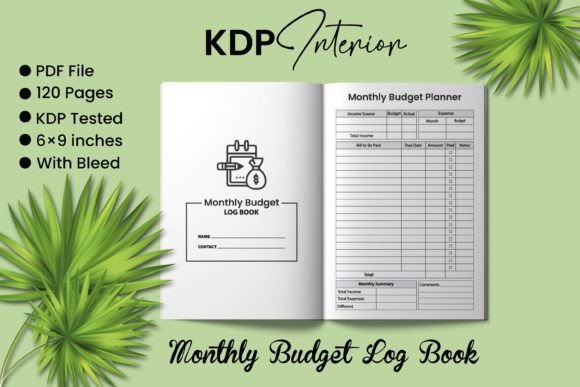
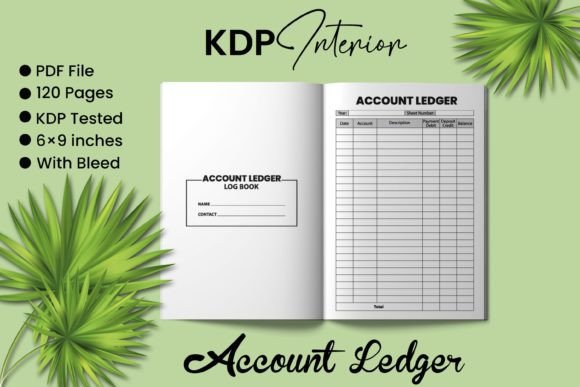
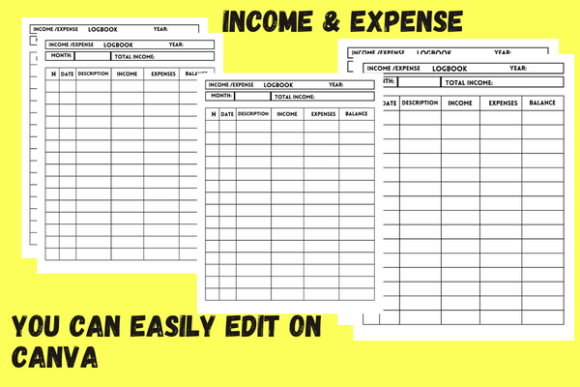
The practical power of this logbook lies in its intentional design. Each page is built around core prompts that mirror the essential questions of business health: Date, Description, Income, Expenses, and Balance. This linear format forces clarity. You cannot hide a poorly categorized expense; you must define it. For a freelance graphic designer, this means clearly seeing the income from a client project alongside the expense of a new software font. For a small retail business, it provides a daily snapshot of cash flow, making it easier to spot seasonal trends or unnecessary recurring costs.
The dedicated Summary section—with its Total Income, Total Expenses, Difference, and End Balance—is where insight crystallizes. This isn't just about recording data; it's about periodically synthesizing it. This regular review, perhaps weekly or monthly, turns raw numbers into actionable intelligence. The "Difference" figure is your immediate profit or loss indicator, while the "End Balance" gives you a running financial position. This simple calculus is the heartbeat of any venture.
Adapting to Modern Workflows: Flexibility Across Platforms
A key modern expectation is flexibility. This journal is ideal for keeping track of incoming payment expenses and outgoing for personal usage, small businesses, and home-based businesses, but its utility extends further. The design acknowledges that today's creator often operates across multiple platforms. You can use this interior in your business on Amazon KDP, Etsy, or other marketplaces. Furthermore, the fact that you can edit this interior easily on Canva is a significant advantage. It means the logbook is not a static product but a template. An educator can adapt it for a classroom budget, a blogger can modify it for tracking affiliate income, and a hobbyist can tailor it for craft supply costs. This editability bridges the gap between the analog reliability of a ledger and the digital customization the modern user demands.
Key Features That Support Real-World Use
- Suitable for personal, small business, or home business use: Its universal application stems from its focus on universal principles. The same logic that manages a household budget manages a micro-business.
- Simple design: Avoids visual clutter and confusing jargon. The priority is readability and ease of entry, reducing friction for daily use.
- Medium 8.5”x11” size: This standard size offers sufficient space for detailed entries while remaining portable and easy to store alongside other documents or in a briefcase.
- 100 pages: Provides a substantial record-keeping capacity for a full year of diligent tracking or for multiple shorter projects, offering tangible value.
Realistic Examples and Observations
Consider a content creator who earns income from YouTube, podcast sponsorships, and freelance writing. Their finances are inherently hybrid. Using this logbook, they can dedicate a single line to each revenue stream, noting the date, platform, amount, and any related expense (like editing software or hosting fees). The running balance shows their real-time financial cushion. Alternatively, a couple running a home-based baking business can use it to track every sale (income) against ingredient costs, packaging, and delivery fees (expenses). The monthly summary instantly reveals their net profit, informing decisions about pricing or scaling. The Notes section is invaluable for jotting down context—why a particular expense was high, or ideas triggered by a positive income week.
A Tool for Empowerment in a Changing Economy
The move towards side businesses, creative entrepreneurship, and independent work is a defining lifestyle shift. In this environment, financial clarity is not merely administrative; it is psychological. Knowing your numbers reduces anxiety and fuels confidence. This Logbook for Business Income serves that deeper need. It provides a structured yet adaptable space to build that clarity. It fits naturally into a workflow that might also include digital tools, acting as the primary, human-reviewed record that can later inform digital analysis. It acknowledges that while technology changes, the core disciplines of business—recording, reviewing, and understanding your finances—remain constant. By mastering those disciplines with a simple, powerful tool, you take direct control of your economic narrative, one clear entry at a time.