Mastering Your Finances with a Budget Planner: A Comprehensive Guide
Introduction to Budget Planners
A budget planner is an essential tool for anyone looking to take control of their finances. Whether you're just starting out, managing a household, or running a small business, a well-structured budget planner can help you track your income and expenses, set financial goals, and make informed decisions about your money.
The Importance of Budget Planning
Budget planning is crucial for several reasons:
- Financial Awareness: It helps you understand where your money goes each month, allowing you to identify areas where you can cut back.
- Goal Setting: By setting clear financial goals, you can save for important milestones like buying a home, paying off debt, or saving for retirement.
- Stress Reduction: Knowing that your finances are under control can significantly reduce stress and anxiety related to money.
Features of Our Monthly Budget Planner
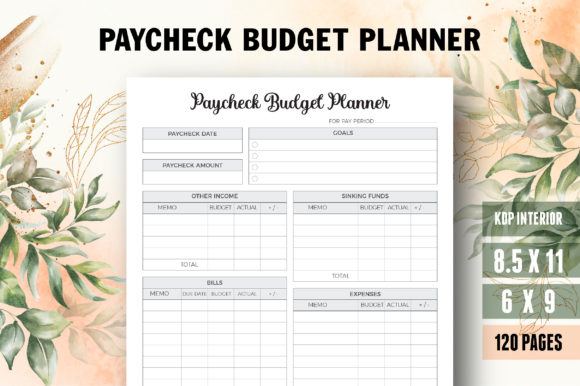
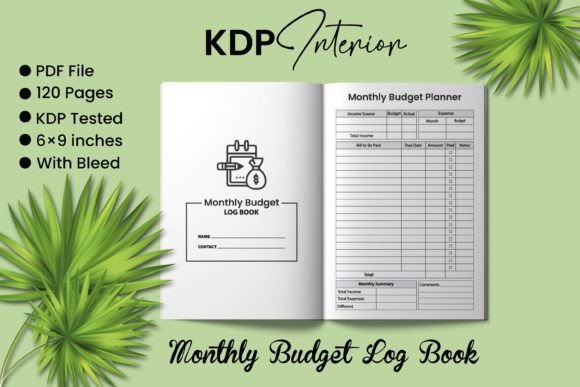
Our monthly budget planner is designed to be both functional and user-friendly, with a range of features to help you manage your finances effectively. Here’s what you get:
Dimensions and Page Count
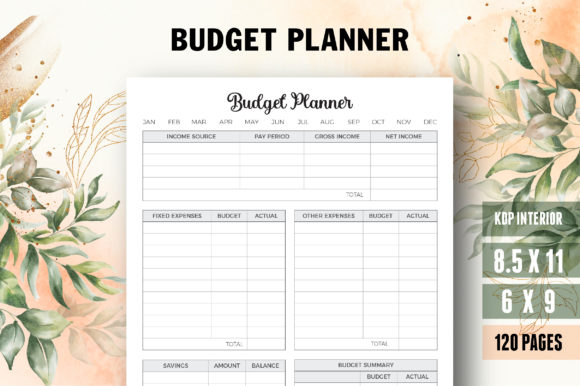
- Dimensions: Available in two convenient sizes: 8.5 x 11 inches and 6 x 9 inches, making it easy to carry and use.
- Pages: 120 pages, providing ample space for detailed financial tracking over multiple months.
Design and Quality
- Unique, Clean, and Professional Design: The layout is designed to be visually appealing and easy to read, with clear sections for different types of financial information.
- High-Quality Print-Ready PDF: The PDF file is ready for high-quality printing, ensuring that every page looks crisp and professional.
- 300dpi High Resolution: The high resolution ensures that all details are clear and legible, even in the smallest print.
Editability and Flexibility
- Editable Source File Included: You can customize the planner to suit your specific needs, whether you need to add more categories or adjust the layout.
- File Formats: Available in PDF, AI, and JPEG formats, making it easy to edit and share as needed.
Setting Up Your Budget
- Identify Your Income: Start by listing all sources of income, including salaries, bonuses, and any other incoming funds.
- List Your Expenses: Categorize your expenses into fixed (e.g., rent, utilities) and variable (e.g., groceries, entertainment) to get a clear picture of your spending.
- Set Financial Goals: Define short-term and long-term financial goals, such as saving for a vacation or paying off a loan.
Tracking and Adjusting
- Regular Updates: Update your budget regularly, at least once a week, to keep track of your spending and stay on target.
- Review and Adjust: At the end of each month, review your budget to see if you met your goals. Make adjustments as necessary to better align with your financial objectives.
Common Misunderstandings About Budget Planners
One common misconception is that budget planners are only for people who are struggling financially. In reality, they are beneficial for anyone, regardless of their financial situation. A budget planner helps you:
- Stay Organized: Keep all your financial information in one place, making it easier to manage and access.
- Make Informed Decisions: With a clear overview of your finances, you can make better decisions about spending and saving.
- Plan for the Future: Set and achieve financial goals, whether it's saving for a big purchase or preparing for retirement.
Conclusion
A well-designed budget planner is a powerful tool for achieving financial stability and success. With its clean design, high-quality print, and customizable features, our monthly budget planner is an excellent choice for anyone looking to take control of their finances. Start using it today and see the difference it can make in your financial life.
For more information and to download your budget planner, visit our website.